info@seahawktravels.in

TL;DR
Managing employee transportation for hybrid workforce is one of the most underrated operational challenges facing Indian HR and admin teams today. Fixed routes, static fleets, and rigid schedules were built for a five-day office week. When attendance becomes unpredictable, those systems quietly start working against you. This post explains what the shift to demand-responsive, safety-first transport looks like in practice and how to get started.
The Problem Nobody Warned HR About
When hybrid work became standard, most conversations focused on collaboration tools, home office allowances, and flexible leave policies. Very few organizations stopped to ask the quieter but equally important question: what happens to employee transportation when people stop coming in every day?
The answer, as HR and admin teams across India’s IT parks, BPO campuses, and corporate office hubs have discovered, is that traditional transport systems built entirely on the assumption of daily, predictable attendance start breaking at the seams. Vehicles run half-empty. Routes become inefficient. Costs stay fixed even as occupancy drops. And on the days when everyone unexpectedly comes in together, there aren’t enough seats to go around.
This isn’t a minor inconvenience. For organizations where investing in employee transportation is already a strategic priority, an inflexible transport model can quietly erase the productivity, safety, and retention benefits that structured commuting is supposed to deliver.
What Hybrid Work Actually Does to an Employee Transport Plan
The core challenge is variability, and it operates across multiple dimensions at once.
Attendance stops following a pattern
In a traditional five-day model, transport planners could predict occupancy within a reasonable margin. In a hybrid model, the same team might send 70% of its people in on Tuesday and 30% on Thursday with no fixed logic to when the heavier days fall and no advance warning until employees decide on the morning itself.
Peak hours fragment
When everyone arrived at 9 AM and left at 6 PM, route clusters were obvious. Hybrid schedules introduce staggered arrivals and split shifts that stretch the peak window across several hours, making fixed-route timings wasteful for most of the window and insufficient at the edges.
Geographic pickup density changes daily
Door-to-door routing depends on knowing roughly where pickups will cluster on a given morning. When employees self-select their office days, the pickup map on Monday can look nothing like Wednesday’s, making pre-planned routes serve the wrong geography half the time.
The cost structure falls out of alignment
Running a full fleet for a partially occupied office burns the budget without delivering value. Under-resourcing on an unexpectedly busy day damages punctuality and employee trust in equal measure. A fixed model has no mechanism to navigate between these two outcomes.
The organizations managing employee transportation for hybrid workforces successfully are not applying more effort to the old approach. They have changed the approach itself.
The Real Cost of Getting It Wrong
Before looking at solutions, it is worth being honest about what poor planning actually costs because the damage rarely surfaces as a clean line item on a report.
Wasted fleet spend is the most visible. A vehicle traveling a route with two confirmed passengers costs nearly as much to operate as one carrying six. Without visibility into actual daily demand, this inefficiency compounds quietly across every route, every working day.
Reduced in-office presence is subtler but equally consequential. When employees cannot rely on predictable, timely pickup, many simply default to a work-from-home day to avoid the uncertainty. For leadership teams actively trying to build in-office culture and structured collaboration, unreliable transport directly undermines that goal, often invisibly.
Talent friction accumulates over time. As explored in our analysis of how reliable employee transportation drives productivity and retention, commute frustration is a slow-burn attrition signal. It doesn’t appear in exit interviews as “the transport was unreliable.” It appears as “I needed a better work-life balance” or “I found something closer to home.” By the time that conversation happens, the cost has already been paid.
Safety gaps emerge in predictable places. Hybrid models often mean smaller groups traveling at off-peak hours, evenings, and early mornings, which are precisely the scenarios where documented safety protocols matter most and informal arrangements carry the most risk.
How Demand-Responsive Employee Transportation for Hybrid Workforce Works
The shift from fixed-route thinking to demand-responsive employee transportation for hybrid workforces is less a technology overhaul than a planning philosophy change. Here is what it looks like on the ground.
Attendance-Confirmed Routing
Rather than running fixed routes regardless of who shows up, attendance-confirmed routing builds each day’s transport plan around employees who have actually confirmed their office visit. Employees notify the operations or admin team by a set cutoff, typically the evening before, and routes are generated based on that day’s confirmed pickup locations. The result is a plan that reflects reality rather than an optimistic assumption made a week in advance.
Tiered Vehicle Allocation
Maintaining a single fleet type for all days creates a permanent mismatch. Optimizing for busy days means excess capacity on lighter ones. Optimizing for lighter days means a shortfall when attendance spikes. A tiered approach matches vehicle type to confirmed daily demand, offering compact options when clusters are small and larger vehicles when occupancy warrants it. This directly improves cost-per-trip efficiency without compromising service levels on heavy days.
Hub-Based Pickup for Metro Cities
In Delhi NCR, Bangalore, and Mumbai, where traffic unpredictability makes door-to-door routing expensive and time-consuming, a hub-based model significantly reduces route complexity. Employees make their own way to a nearby designated pickup point (a metro station, a familiar landmark, or a market) and are transported from there to the office in optimized batches. This shortens route lengths, improves arrival punctuality, and reduces per-trip fuel costs without adding meaningful inconvenience for most employees.
Shift-Cluster Scheduling
For organizations running multiple shifts common across IT services, BPO, healthcare, and manufacturing, grouping pickups by shift window rather than individual arrival time reduces the number of active vehicles needed without reducing coverage quality. A shift-aligned schedule built around confirmed attendance makes this operationally straightforward without requiring manual planning for every individual trip.
Safety Is the One Thing That Cannot Flex
One of the more consequential assumptions in hybrid transport planning is that fewer employees traveling means lower safety requirements. The reality is frequently the opposite. Late-evening and early-morning trips with smaller groups, less familiar routes, and reduced peer oversight are higher-risk scenarios than a busy daytime shuttle. For women employees especially, many of whom are weighing whether late shifts or early-morning starts are worth the commute, safety is not an added feature. It is the deciding factor in whether they take the role, stay in the role, or recommend the organization to others.
Ensuring safe commutes for women employees requires more than a GPS tracker on a dashboard. It requires documented, enforced protocols: verified drivers, live trip monitoring through real-time tracking linked to an active control room, in-vehicle panic alert systems, and a response architecture that acts rather than just observes.
Non-negotiable safety elements for any hybrid transport arrangement include:
- Background-verified drivers with ongoing performance monitoring, not just onboarding checks
- GPS-enabled live tracking visible to both the employee and the operations team simultaneously
- In-vehicle panic or SOS alert that reaches a 24/7 control room directly
- Defined late-shift SOPs with mandatory check-in and escalation triggers
- Control room coverage that is genuinely round-the-clock with documented response protocols
These are operational standards. They apply regardless of whether an organization runs five days a week or three
Is Your Current Transport Arrangement Actually Hybrid-Ready?
Most corporate transport setups in India were designed for a different era of work. If yours has not been reviewed since hybrid schedules became the norm, these five questions establish whether it is keeping pace or quietly falling behind. Organizations managing employee transportation services in Hyderabad and other major tech corridors often find the gaps immediately visible once these questions are applied.
1. Can routes change based on next-day attendance?
If your provider needs a week’s notice to adjust a route, the system is not designed for hybrid variability.
2. Is there a reliable process for employees to confirm their travel day?
Without this input feeding into route planning, the transport plan is based on guesswork, and guesswork means either wasted spend or missed pickups.
3. How does vehicle allocation respond to attendance variation?
If the same fleet configuration runs on both your lightest and heaviest days, cost optimization is being left on the table.
4. What are the documented safety protocols for late-shift transport?
“We handle it case by case” is not a protocol. Ask to see written SOPs covering after-hours trips.
5. What performance data does your provider share with HR and admin?
A hybrid-capable partner should deliver per-route, per-shift, and per-vehicle data’ not just a monthly invoice.
These questions separate a logistics vendor from a workforce mobility partner. The difference in outcomes is significant.
A Phased Starting Point for HR and Admin Teams
Improving hybrid transport doesn’t require a full operational overhaul from day one. A staged approach delivers measurable results faster and with less disruption than a large rollout.
Weeks 1–2: Audit your current picture
Pull 90 days of attendance data and map it against current transport utilization. Identify your highest-variability days, most consistently underused routes, and the periods generating the most employee or admin complaints. The inefficiency is usually immediately visible at this step.
Weeks 3–6: Run a contained pilot
Select two or three routes with known attendance variability. Introduce a simple confirmation process: employees notify the admin team the evening before if they’re coming in. Track vehicle occupancy and arrival punctuality against your current baseline over the pilot period.
Month 2 onwards: Optimize and scale
Use pilot data to refine vehicle allocation, adjust route clusters, and build reporting formats for monthly HR review. Expand what is working; don’t scale what isn’t. Governance structures should precede scale, not follow it.
This approach generates credible, measurable evidence within weeks and gives leadership something concrete to evaluate before a larger program commitment.
How Sea Hawk Travels Supports Hybrid Workforce Mobility
Sea Hawk Travels works with organizations across Delhi NCR, Bangalore, Mumbai, Hyderabad, Pune, Chennai, Kolkata, and Indore to build and operate employee transportation services that adapt to how modern workforces actually move.
Our approach to employee transportation for hybrid workforce mobility includes:
- Demand-responsive routing built around confirmed daily attendance, coordinated through our operations team
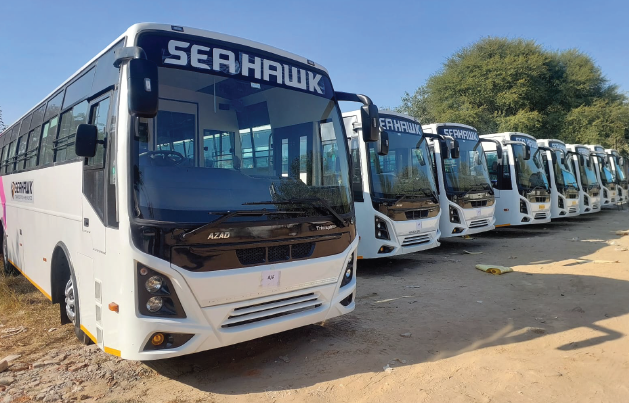
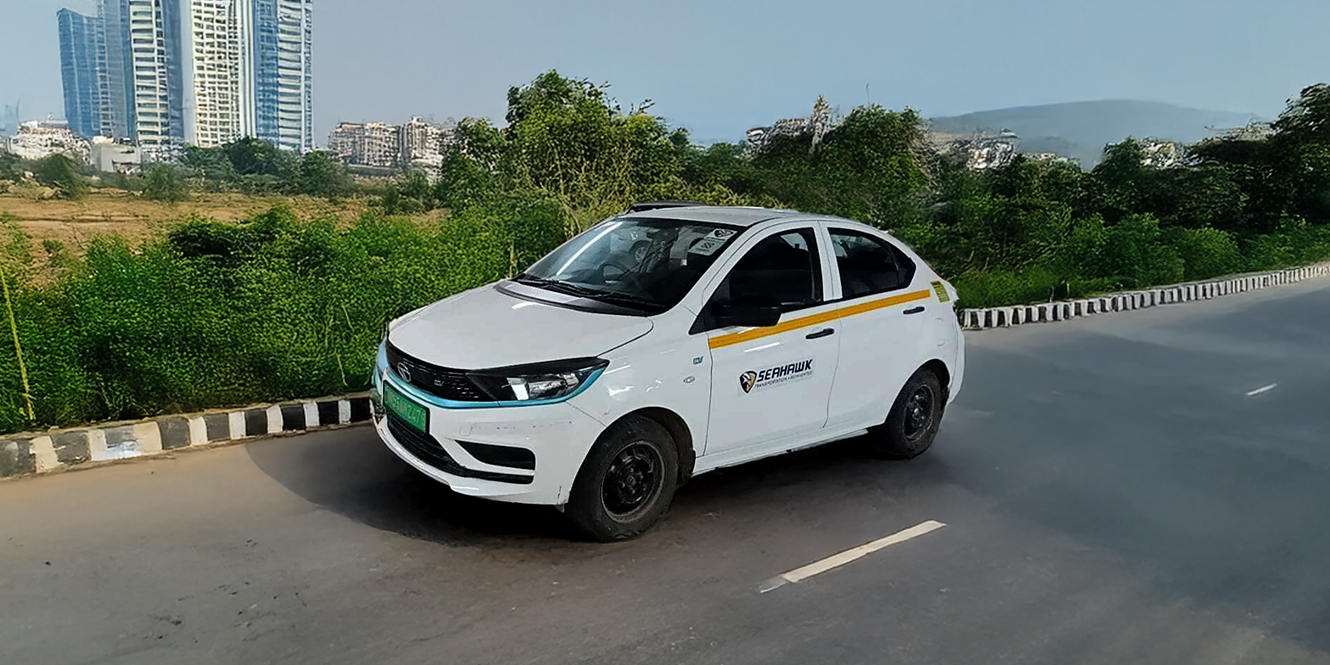
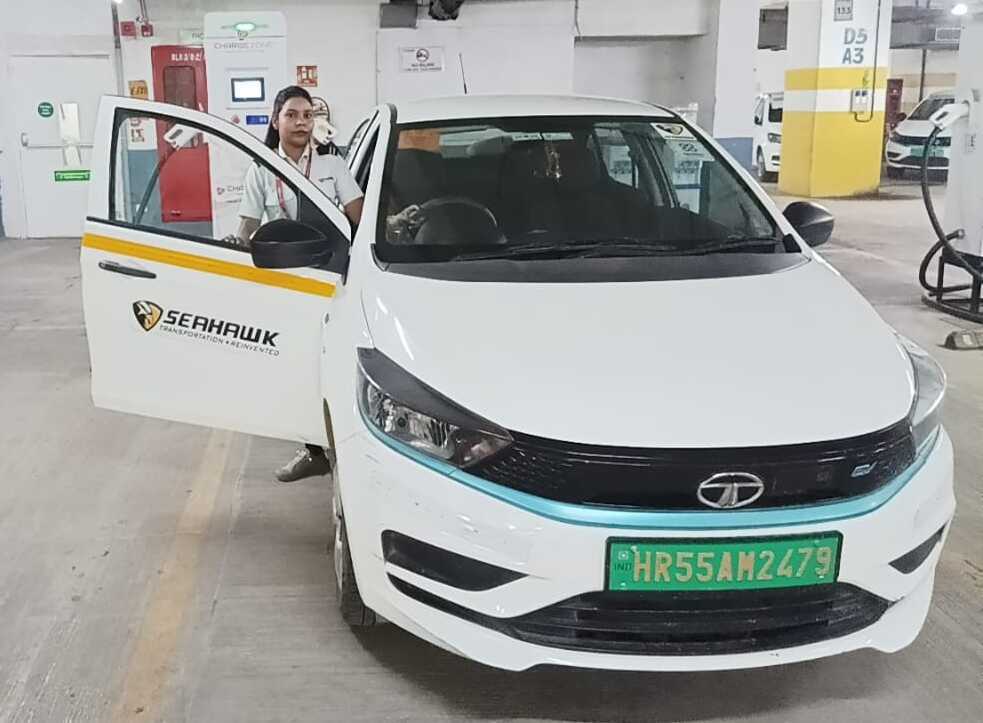
- Tiered fleet allocation matched to actual daily headcount: sedans, SUVs, and larger vehicles deployed based on confirmed demand
- GPS-enabled fleet with real-time vehicle tracking and centralised operational visibility
- 24/7 control room with structured escalation protocols for breakdowns, delays, and emergencies
- Defined safety SOPs for late-shift and early-morning routes, with specific provisions for women employees
- HR and admin-ready reporting frameworks for monthly performance review cycles
If your current transport arrangement was designed for a five-day office week and hasn’t been revisited since hybrid work became the norm, that is a structural gap worth addressing, not because the old model failed, but because the way your people work has fundamentally changed.
Talk to us about hybrid-ready employee transportation →
Frequently Asked Questions
Q1. Does employee transportation for hybrid work cost more than a traditional setup?
Not if it is managed correctly. The expensive scenario is running a fixed-cost transport model against variable attendance, which makes every low-attendance day more wasteful than it needs to be. Demand-responsive routing, tiered vehicle allocation, and hub-based pickups actively reduce cost by matching supply to confirmed demand. The shift is from a fixed-cost model to a variable one grounded in real attendance data.
Q2. How do employees confirm their travel days in a hybrid transport system?
Most arrangements use a daily confirmation process: employees notify the operations or admin team by a set cutoff time, typically the evening before, and routes are generated from those confirmations. More integrated setups connect this to existing HR attendance systems, removing the manual step entirely.
Q3. Is safety more or less of a concern in hybrid transport than in traditional setups?
More, in specific scenarios. Hybrid schedules frequently produce late-evening or early-morning trips for smaller groups, which are higher-risk situations than peak-hour shuttles. Safety protocols should be at least as rigorous as traditional setups and, in some scenarios, more specifically defined for after-hours conditions..
Q4. Our office runs three days a week. Is structured corporate transport still cost-justified?
Yes, but only if the transport system is configured to respond to actual attendance rather than assumed occupancy. Without that configuration, you pay for five days and receive three days of value. A properly structured system recovers that efficiency and frequently reduces per-trip cost below what informal arrangements deliver.
Q5. How do we build the business case for hybrid transport investment with leadership?
Track three numbers over two quarters: cost per completed trip before and after restructuring, on-time arrival rate, and voluntary attrition delta between employees who use company transport and those who do not. These three metrics make the case with evidence rather than assumptions.